Home / Small bedroom ideas
3 Bedside Storage Ideas for Small Bedrooms
Start with what needs to stay beside your bed, then choose the smallest useful home for it.
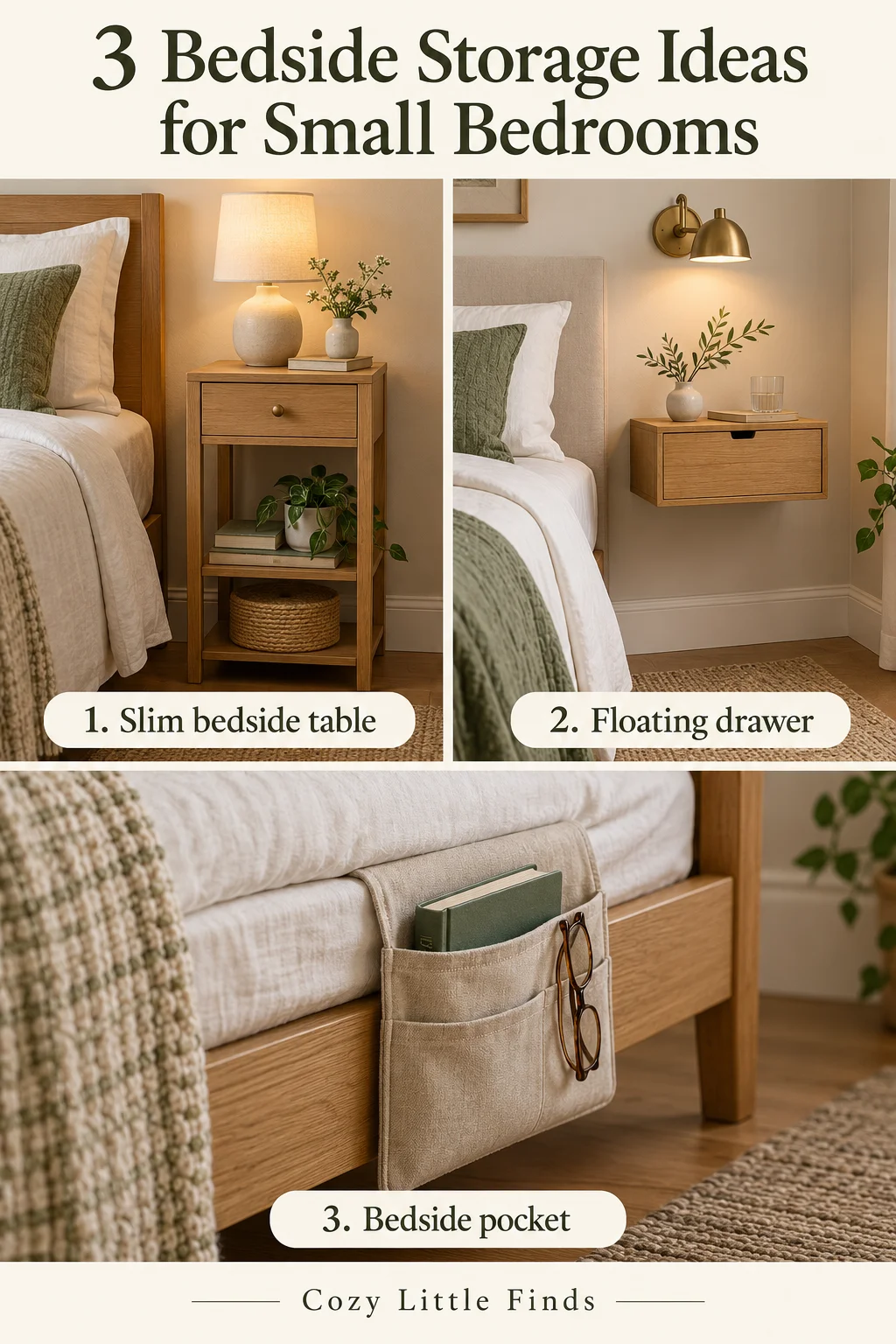
A bedside surface often becomes a landing place for everything: a book, a lamp, glasses, a phone and the things that never found another drawer. In a small bedroom, the useful question is how much of that really needs to stay within reach at night.
Gather your everyday bedside items before choosing furniture. Separate the things you use each evening from occasional extras. A drawer can hide a charging cable or notebook, while an open shelf makes a current book easier to reach. The best arrangement is the one that fits both your routine and the actual space beside your mattress.
In this guide
| Option | Useful when | Check before choosing |
|---|---|---|
| Slim bedside table | You need a lamp surface and some enclosed storage | Width, drawer opening and access beside the bed |
| Floating drawer | You want storage with the floor left visible | Wall suitability, fixing requirements and permission |
| Fabric bedside pocket | A book and glasses are your main essentials | Mattress attachment, fit and access to the bed |
A slim bedside table for everyday essentials
A narrow table is a useful starting point when you need a stable surface as well as storage. Look at the depth as carefully as the width: a unit that fits between the bed and wall can still project into the route around the bed. A drawer and one lower shelf offer different homes for small items without requiring a large chest.
Check where the drawer opens and whether you can reach it comfortably from bed. Leave space for the lamp base before filling the top with decor. A tray can group glasses and a watch, but it should not take over the entire useful surface. Keep the lower shelf easy to use rather than packing it with objects you rarely need.
A floating drawer with the floor left open
A wall-mounted drawer can give the bedside a lighter appearance because no legs meet the floor. It still occupies real space, so measure the full depth and think about how far the drawer front travels when open. Match its position to the mattress and your comfortable reach rather than to a photograph alone.
This option needs a suitable wall, correct fixings and installation that follows the furniture maker’s instructions. If you rent, check permission before making holes. The illustration suggests a layout; it does not establish that a particular wall or product can carry a load. If installation is uncertain, choose a freestanding alternative.
A fabric pocket for a book and glasses
A bedside pocket suits a simple routine when the main items are a current book, reading glasses or a small notebook. It uses the side of the bed instead of adding another floor-standing unit. Choose an attachment style that suits your mattress and bed frame, and check that the pocket stays in place during normal use.
Keep it lightly filled and away from the path where you step out of bed. A pocket is not a substitute for a stable surface for a drink or lamp. If charging a phone nearby, follow the device maker’s guidance and keep it out from under bedding rather than enclosing it in a crowded fabric compartment.
Make a quick bedside plan before buying
Write down the available width, useful depth and mattress height. Include skirting boards, nearby sockets, curtains and any drawer or wardrobe that opens into the same area. Mark the proposed furniture footprint on the floor with a removable outline and walk your normal route around it.
Then assign a place to each item from your original bedside list. If an object has no clear purpose there, store it elsewhere. This small check is more useful than choosing the biggest unit that can physically squeeze into the gap.